Survival, Psychological or Action Horror? Horror Game Subgenres Compared
Survival, psychological, action, stealth, cosmic and co-op horror compared: how each one scares you and which games show it best.
Two games can both be called “horror” and feel nothing alike. One hands you a shotgun and a horde of monsters; another takes away every weapon and leaves you hiding in a locker, listening to footsteps. A third barely has enemies at all and unsettles you with what the story slowly implies. Knowing the main horror subgenres helps you pick games that match your taste and tolerance, and it explains why a recommendation from a friend sometimes misses completely.
Below are six broad styles of horror game. For each one we look at the core gameplay loop, the way fear is produced and a few representative games. The categories overlap constantly, and that overlap is part of the story too.
Survival horror: scarcity and dangerous spaces
Core loop: explore a large, interconnected location, solve puzzles to unlock new areas, manage a small inventory and decide which threats to fight and which to avoid.
How it scares you: through pressure on resources. You can fight back, but never comfortably. Each encounter costs ammunition or healing you may need later, and the threat of running out is constant. Safe rooms, item boxes and limited saves create a rhythm of tension and relief. We cover the full definition in our survival horror explainer.
Representative games:
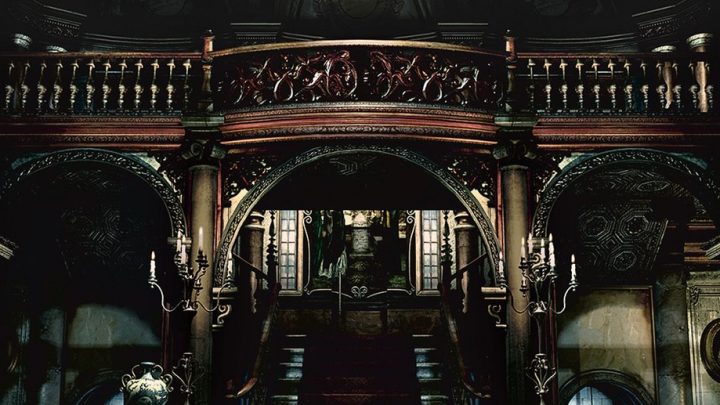
- Resident Evil (1996), Capcom’s mansion-set classic that popularized the term.
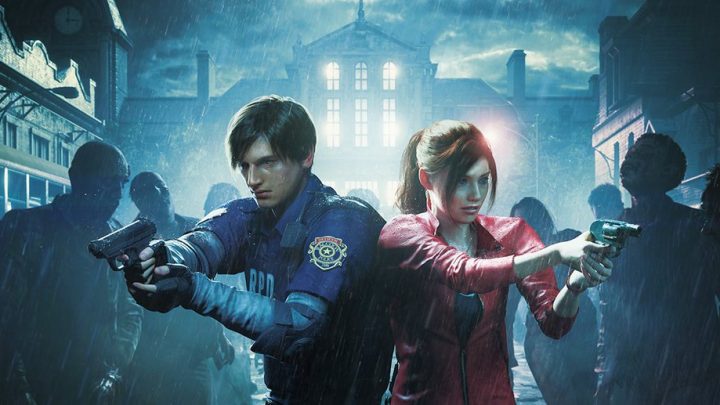
- Resident Evil 2 (2019), a remake that modernizes the camera and controls while keeping item boxes, typewriters and a stalking Tyrant who cannot be killed, only stunned.
- Signalis (2022), by rose-engine, which limits the player to six inventory items and borrows Resident Evil-style safe rooms.
Psychological horror: the mind as the haunted house
Core loop: varies widely. Some psychological horror games include combat; many focus on exploration and story.
How it scares you: by making you doubt what you are seeing and what the protagonist is hiding. Monsters often function as symbols, environments shift without explanation, and the real horror is frequently a truth about a character that the game reveals gradually. The fear is slower and more lingering than a jump scare.
Representative games:
- Silent Hill 2 (2001), Team Silent’s story of widower James Sunderland, who receives a letter from his dead wife and travels to the town of Silent Hill. Its monsters, including Pyramid Head, are tied to James’s guilt. A remake by Bloober Team followed on October 8, 2024.
- Call of Cthulhu: Dark Corners of the Earth (2005) blends into cosmic horror but also models the protagonist’s fragile mind, with hallucinations and distorted audio when he sees too much.
The overlap: Silent Hill 2 is the classic example of a game that belongs to two categories. It has limited supplies, combat, puzzles and a town to explore, so it is survival horror in structure. But its themes, symbolism and multiple endings, six in the original, make it a cornerstone of psychological horror. Even its interface reflects the split: players set combat difficulty and puzzle difficulty separately.
Action horror: monsters you can fight
Core loop: combat-heavy progression through linear or semi-linear levels, with more ammunition, upgrades and set-piece encounters.
How it scares you: through intensity, grotesque enemy design and being overwhelmed. Fear comes from enemies rushing in from several directions and from the risk of being cornered, rather than from having nothing to fight with.
Representative games:
- Resident Evil 4 (2005), which moved the series to an over-the-shoulder camera and far more combat, and became hugely influential.
- Dead Space (2008), developed by EA Redwood Shores, with Resident Evil 4 as its main inspiration. Its “strategic dismemberment” means enemies die only when you sever their limbs, so even the shooting is designed to be unsettling. Its health bar sits on the back of Isaac Clarke’s suit instead of a traditional HUD.
The overlap: action horror and survival horror share a border. Dead Space still has limited inventory space and scarce ammunition on higher difficulties, so many players count it as survival horror. As a rule of thumb, the more often a game expects you to win fights, the further it leans toward action.
Stealth and run-and-hide horror: no way to fight back
Core loop: explore, avoid detection, hide in lockers or under beds, and run when spotted. There is little or no combat.
How it scares you: by removing the option that most games consider basic: defending yourself. When an enemy appears, your only choices are to flee or hide, and that helplessness is the whole design.
Representative games:
- Amnesia: The Dark Descent (2010), by Swedish studio Frictional Games. Daniel cannot fight, darkness and monsters drain his sanity, and light sources like tinderboxes and lantern oil are limited. Doors and objects are moved with physics-based interactions, so even closing a door behind you is a physical act.
- Outlast (2013), by Canadian studio Red Barrels. Journalist Miles Upshur explores Mount Massive Asylum with a camcorder whose night-vision mode drains scarce batteries. There is no visible health bar and no way to attack.
- Alien: Isolation (2014), in which a single unkillable creature hunts the player, who has to rely on stealth.
The overlap: stalker enemies have spread into survival horror too. The Tyrant in Resident Evil 2 (2019) and earlier pursuers like Clock Tower‘s Scissorman bring run-and-hide moments into games that otherwise let you fight.
Cosmic horror: the universe does not care
Core loop: often investigation and exploration, sometimes combat, usually tied to uncovering forbidden knowledge.

How it scares you: through scale and incomprehension. Inspired by H. P. Lovecraft and similar writers, cosmic horror suggests that humanity is tiny and that understanding the truth is itself dangerous. Sanity systems and unreliable perception are common.
Representative games:
- Call of Cthulhu: Dark Corners of the Earth (2005 on Xbox, 2006 on PC), by Headfirst Productions, reimagines The Shadow over Innsmouth. It has no HUD: health is conveyed through breathing, heartbeat and the screen losing color, and looking at horrors erodes the hero’s sanity.
- Dredge (2023), by New Zealand studio Black Salt Games, wraps cosmic horror in a fishing game. Days are calm, but at night a fog rolls in and a panic meter rises, making supernatural events more likely.
- Alone in the Dark (1992), with its Lovecraft-inspired library and creatures, shows how far back the influence goes.
Co-op and multiplayer horror: fear with friends
Core loop: a group of players shares an objective, such as investigating a haunting, collecting loot or escaping a killer.
How it scares you: differently from solo horror. Friends make things less lonely, so these games often use proximity voice chat, separation and chaotic emergencies to keep fear alive. The result is frequently as funny as it is frightening.
Representative games:
- Phasmophobia (early access since September 18, 2020), by British studio Kinetic Games. One to four ghost hunters gather evidence to identify a ghost type, and speech recognition lets the ghost respond to what you say aloud.
- Dead by Daylight (2016), by Behaviour Interactive. An asymmetric one-versus-four game: one player is the Killer, four are Survivors repairing generators to power the exit gates.
- Lethal Company (early access since October 23, 2023), by Zeekerss. Up to four players scavenge scrap on abandoned moons to meet ever-rising profit quotas, with proximity voice chat making separation frightening.
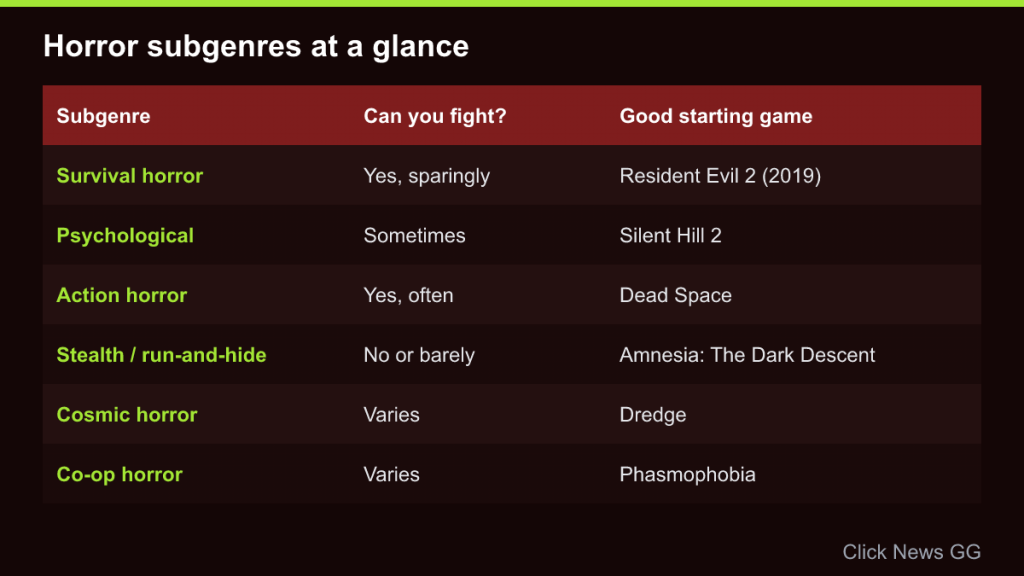
Quick comparison table
| Subgenre | Can you fight? | Main source of fear | Good starting game |
|---|---|---|---|
| Survival horror | Yes, sparingly | Scarce resources, dangerous spaces | Resident Evil 2 (2019) |
| Psychological horror | Sometimes | Doubt, symbolism, hidden truths | Silent Hill 2 |
| Action horror | Yes, often | Intensity, being overwhelmed | Dead Space |
| Stealth / run-and-hide | No or barely | Helplessness, being hunted | Amnesia: The Dark Descent |
| Cosmic horror | Varies | Scale, forbidden knowledge | Dredge |
| Co-op horror | Varies | Separation, chaos, shared panic | Phasmophobia |
How to choose a subgenre that suits you
A few honest questions can narrow things down:
- Do you hate feeling powerless? Start with action horror or classic survival horror, where you can always defend yourself to some extent. Run-and-hide games may feel more stressful than fun.
- Do you prefer story to scares? Psychological horror tends to emphasize narrative and atmosphere over constant threats.
- Do you like puzzles and planning? Survival horror’s inventory juggling and locked-door puzzles will suit you.
- Do you mainly play with friends? Co-op horror is built for groups, and the scares are often more playful.
- Are you drawn to strange, unknowable themes? Cosmic horror games deliver dread without relying on gore.
Common mix-ups
A few misunderstandings come up again and again when people talk about horror subgenres:
- “Psychological horror means no combat.” Not necessarily. Silent Hill 2 has plenty of combat; what makes it psychological is how its monsters and places reflect the protagonist’s state of mind.
- “Survival horror means you cannot fight.” In the classic sense, you can fight, but resources are too scarce to fight everything. Games where you truly cannot fight are better described as run-and-hide or stealth horror.
- “Action horror is not scary.” Being swarmed in a dark corridor with an empty clip can be terrifying. Action horror simply trades slow dread for intensity.
- “Co-op horror is just a party game.” Many co-op horror games become frightening precisely when the group splits up and one player is suddenly alone, hearing teammates only through proximity chat.
Labels are tools, not rules
Subgenres describe tendencies rather than strict boxes. Silent Hill 2 is survival and psychological horror at once; Dead Space sits between survival and action; Alien: Isolation combines stealth with a survival horror crafting and inventory layer; Dredge is a fishing game first and a cosmic horror story second. Developers mix ingredients freely, and some of the most memorable horror games are the ones that blend styles in unexpected ways.
The useful question is not “what genre is this?” but “what will I spend my time doing, and where will the fear come from?” Answer that, and you will have a much better idea of whether a horror game is right for you.