Dead Space Series History: The USG Ishimura, Visceral and the 2023 Remake
The full history of EA's Dead Space: the 2008 original, its sequels and spin-offs, Visceral's 2017 closure and Motive's 2023 remake.
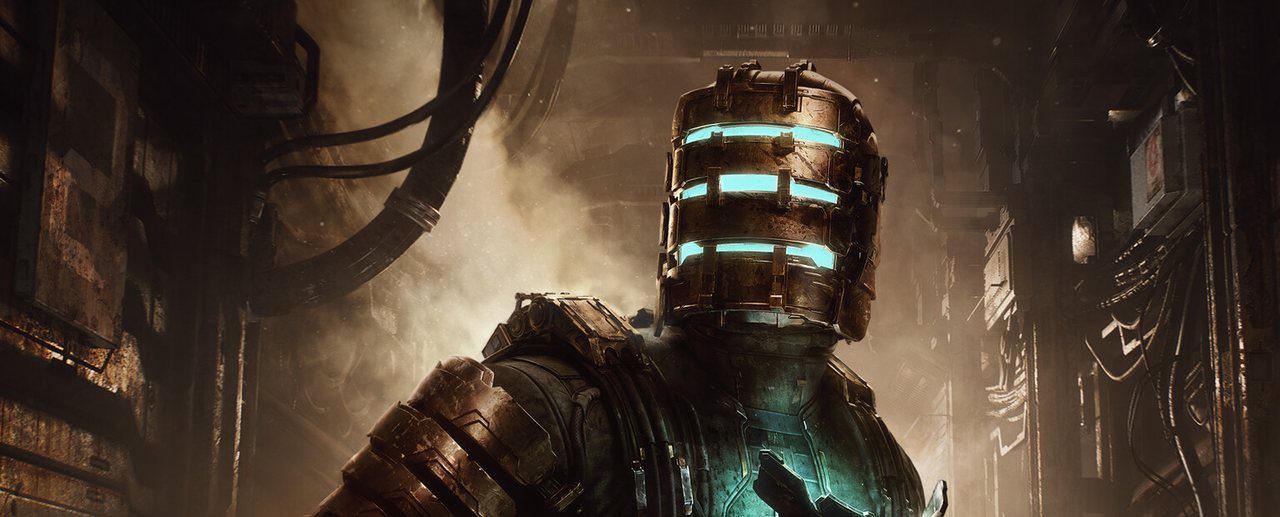
Few horror series have had a life as dramatic as Dead Space. It arrived in 2008 as a confident new sci-fi horror franchise from Electronic Arts, grew into a multimedia property with sequels, spin-offs, animated films and comics, drifted towards action, went dormant when its studio closed, and then returned in 2023 with a remake that many fans consider the definitive way to board the USG Ishimura. This is the story of that arc, game by game.
Origins: EA Redwood Shores Goes Into Space
Dead Space was developed by EA Redwood Shores, an Electronic Arts studio in California that had been founded in 1998. Glen Schofield is credited as the series’ creator and served as executive producer on the first game, with Michael Condrey among its directors. The team set out to make a horror game that could stand alongside the genre’s best, with a strong influence from the over-the-shoulder action horror that Resident Evil 4 had popularised a few years earlier.
The premise is simple and effective. Isaac Clarke, a ship systems engineer, arrives with a small crew to repair the mining vessel USG Ishimura after it goes silent. The ship turns out to be overrun by Necromorphs — reanimated, mutated corpses — and Isaac must survive using engineering tools rather than military weapons.
Dead Space (2008): The Original
The first game launched in North America on October 13, 2008, for PlayStation 3 and Xbox 360, with the Windows version following on October 20. It quickly became a critical success, and two of its ideas defined the series.
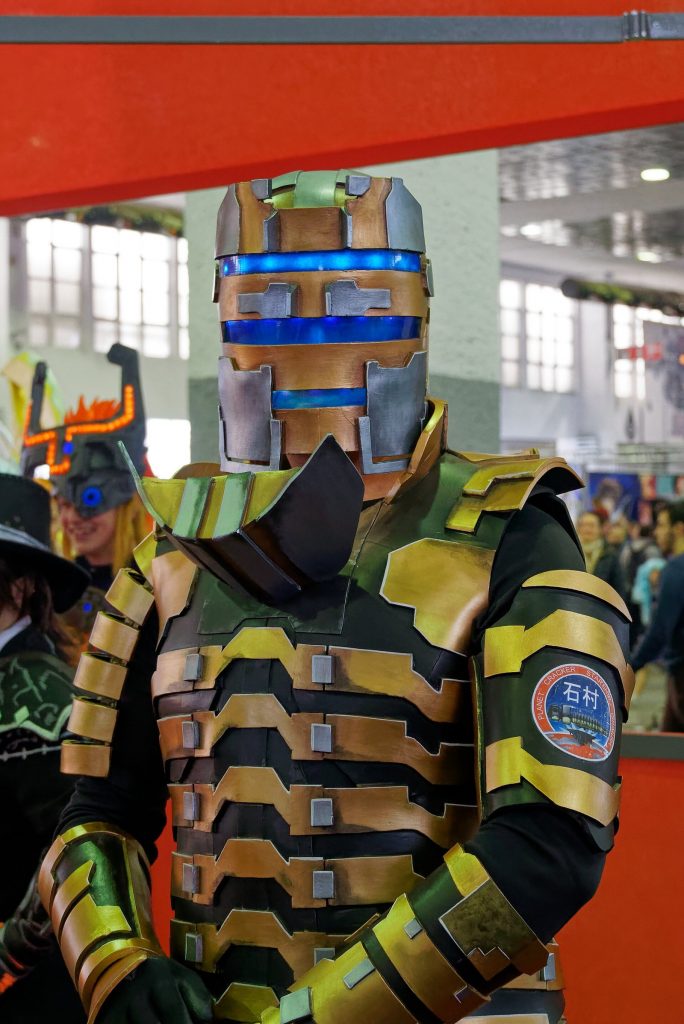
Strategic dismemberment
Necromorphs are not killed efficiently by headshots. Instead, the game’s founding principle is strategic dismemberment: you sever limbs to bring enemies down. This simple rule rewired players’ shooter instincts and made every encounter a test of composure, since a panicked spray of bullets into an enemy’s torso wastes precious ammunition. (We cover that aspect in our explainer on survival horror resource management.)
Diegetic interface
The second signature is the diegetic UI. Instead of a traditional heads-up display, information such as menus and the inventory appears as holographic projections inside the game world. The game does not pause while you browse your inventory, so even rearranging items carries risk. Combined with stasis, which slows enemies for a limited time, and kinesis, which lets Isaac grab and throw objects, the design gave the game a coherent identity: everything you see belongs to Isaac’s world.
The game also built an economy around a store, workbenches for upgrading weapons and the suit, and Power Nodes that could either open special doors or improve equipment.
Becoming Visceral Games and Expanding the Universe
The success of Dead Space led EA to rebrand the studio as Visceral Games in 2009, making it its own EA division. The franchise expanded quickly into other media and spin-offs:
- Dead Space: Downfall (2008) — a direct-to-video animated film set around the outbreak on the Ishimura.
- Dead Space: Extraction (2009) — a Visceral-developed rail-shooter-style prequel for Wii, later brought to PS3.
- Dead Space Ignition (October 2010) — an action puzzle spin-off for PS3 and Xbox 360, co-developed by Sumo Digital and Visceral, whose completion unlocked bonuses in the console versions of Dead Space 2.
- Dead Space: Aftermath (2011) — a second animated film.
- Dead Space (mobile, 2011) — developed by IronMonkey Studios for iOS, Android and BlackBerry devices; it has since been removed from mobile storefronts.
Comics and novels filled in the backstory of the Marker, the alien artifact at the centre of the series’ lore, and the Unitology religion that worships it.
Dead Space 2 (2011): A Bigger, Louder Nightmare
Dead Space 2 launched in late January 2011 for PlayStation 3, Windows and Xbox 360. Set three years after the first game, it moves the action to the Sprawl, a space station built in the remains of Saturn’s moon Titan. The most noticeable change was Isaac himself: the silent protagonist of the original became a voiced character, played by Gunner Wright, who also provided motion capture.
The sequel kept the dismemberment, stasis and kinesis core but expanded the scale, with more set pieces and a broader range of locations, from residential areas to a church of Unitology. It also added Outbreak, a competitive multiplayer mode in which four human players defend against four players controlling Necromorphs. A console-exclusive story DLC, Severed, followed in March 2011, centred on Sprawl security officer Gabe Weller.
Many fans regard Dead Space 2 as the series’ high point: still frightening, but more confident and varied in pacing than the first game.
Dead Space 3 (2013): Co-op, Crafting and Controversy
Dead Space 3 arrived in early February 2013 on PS3, Windows and Xbox 360. Its biggest additions changed the feel of the series considerably:
- Co-op: a second player could join online as John Carver, with some puzzles altered and co-op-only side missions and cutscenes added.
- Weapon crafting: weapons were built from blueprints at crafting benches and customised with different firing types and enhancements, using resources gathered from the environment, a scavenger robot and defeated enemies.
- Microtransactions: crafting resources could be bought with real money from the bench, a decision that drew criticism from outlets including GameTrailers and Electronic Gaming Monthly.
Reviews were generally favourable, with praise for atmosphere, crafting and co-op, but many critics argued that the series had moved too far from survival horror towards action. A story expansion, Awakened, followed in March 2013 and received a mixed reception. Reports at the time said a fourth game was cancelled after Dead Space 3 sold below expectations.
For a sense of where that shift sits within horror more broadly, see our comparison of survival, psychological and action horror.
The Dormant Years and Visceral’s Closure
After Dead Space 3, Visceral moved on to other projects. It worked on Battlefield Hardline (released in 2015) and was then assigned a Star Wars game after Disney shut down LucasArts in 2013. That project, code-named Yuma and later Ragtag, was led creatively by Amy Hennig.
On October 17, 2017, EA closed Visceral Games. The Star Wars project was moved to EA Vancouver, with EA saying it needed to “pivot the design”. The closure left Dead Space without a managing developer, and the series was effectively shelved.
The ideas behind the series lived on in interviews. Former creative director Ben Wanat described a Dead Space 4 concept to Eurogamer in 2018, and producer Chuck Beaver said in 2021 that a fourth game would have explored Isaac as an unreliable narrator. Meanwhile, Glen Schofield went on to make The Callisto Protocol, widely seen as a spiritual successor.
Dead Space (2023): Motive’s Remake
EA’s Motive Studio eventually remade the original game. Dead Space (2023) released on January 27, 2023, for PlayStation 5, Windows and Xbox Series X/S, built on EA’s Frostbite engine with systems rebuilt from scratch.
Key changes from the 2008 version include:
- A voiced Isaac. Gunner Wright returned, giving the first game’s protagonist his own lines for the first time.
- A continuous ship. Using the fast storage of current consoles, the remake presents the Ishimura as an uninterrupted sequence without loading screens between levels.
- The peeling system. Necromorph flesh can be torn away layer by layer, adding new depth (and gore) to dismemberment, with different weapons suited to severing limbs or stripping bodies.
- Reworked progression. Some locked doors and containers are opened by rerouting the ship’s power through junction boxes or via security clearances, instead of spending Power Nodes.
- No microtransactions. The remake does not include them, a clear break from Dead Space 3.
The remake was well received by critics and is widely considered the best entry point into the series today.
Where the Series Stands as of October 2026
As of October 2026, EA has not announced a new Dead Space game. Reports from journalists such as Jason Schreier have said Motive explored a new entry after the remake but that the project was shelved after the remake’s sales came in below hopes. A Dead Space 2 remake was also reportedly considered; EA denied a report that it had been cancelled. None of these reports amount to an official announcement, and the franchise’s future remains unconfirmed.
How to Play Dead Space Today
If you are new to the series, a sensible route is:
- Dead Space (2023) on PS5, Xbox Series X/S or PC, as the modern version of the first game.
- Dead Space 2 (2011), which still holds up well and continues Isaac’s story directly.
- Dead Space 3 (2013) if you want to finish the trilogy, ideally with a friend in co-op. The PC version reached Steam in 2020 after originally launching on EA’s Origin.
Spin-offs such as Extraction and Ignition are optional, and the animated films are best treated as extras for dedicated fans.
Why Dead Space Still Matters
Dead Space proved that a big-budget Western publisher could build a horror franchise around mechanics rather than just atmosphere. Strategic dismemberment changed how players aimed. The diegetic interface became one of the most cited examples of immersive UI in game design. And the 2023 remake showed how a faithful update could modernise a classic without losing the dread that made it work. Whatever happens next, the Ishimura remains one of horror gaming’s most memorable places to be lost in.
Quick Answers
Do I need the spin-offs to follow the story?
No. The three numbered games tell Isaac’s story on their own. Spin-offs and the animated films add background about the Marker, Unitology and other survivors, but nothing in the main games depends on them.
Should I play the 2008 original or the remake?
For most newcomers, the remake. It keeps the structure and the horror of the original while adding a voiced Isaac, a seamless ship and more detailed dismemberment. The 2008 version is still worth a look if you are curious about how the series began, and it remains a historically important game in its own right.