The Best Horror Games for Beginners: Where Scaredy-Cats Should Start
Twelve approachable horror games for nervous newcomers, from gentle spooky stories to modern classics with easy modes. Spoiler-free picks.
Starting with horror games can feel like jumping into the deep end. Recommendations often come from seasoned fans who have forgotten how intense their first zombie corridor felt. This list is built differently: every pick here is either low in intensity, forgiving in difficulty, short enough to finish before nerves wear thin, or offers settings that take the edge off.
The list is roughly ordered from gentlest to most intense, and it is spoiler-free. Platform notes are kept general because availability changes; check your store of choice before buying.
How we picked
Each game was judged on four things that matter most to nervous newcomers:
- Scare intensity: are the scares mostly atmosphere and dread, or jump scares and gore?
- Difficulty options: can you lower combat difficulty or avoid combat entirely?
- Length: shorter games mean less time spent under pressure.
- Play style: can you play with friends, watch more than act, or pause and breathe?
The gentle starters
1. Oxenfree (2016)
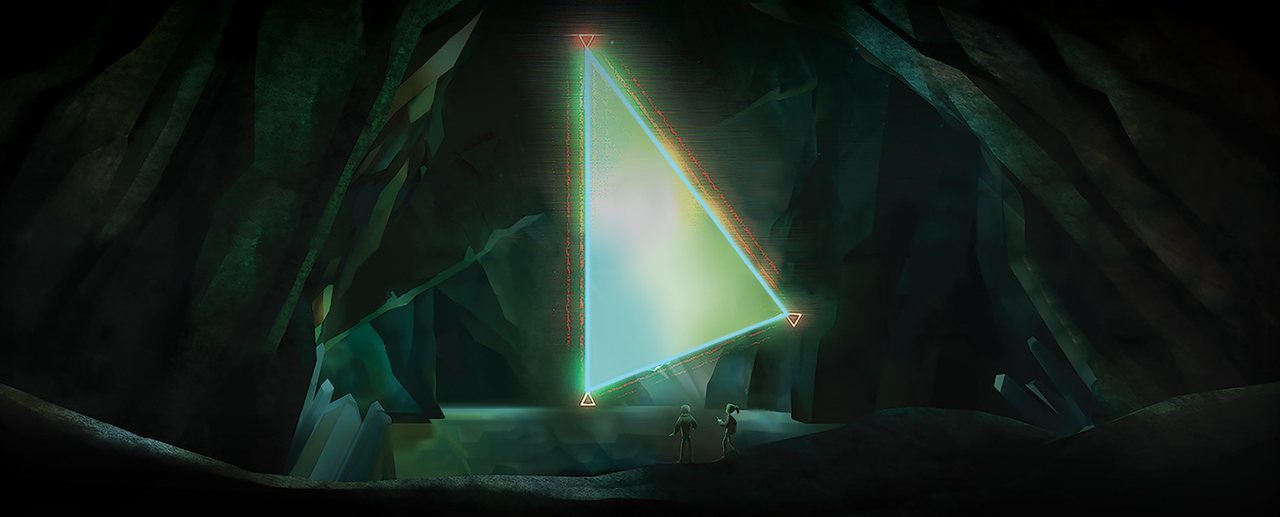
Night School Studio’s supernatural adventure follows teenager Alex and her friends on a small island, where tuning a handheld radio opens a rift and unleashes something strange. Ghostly possession and time loops give it an eerie tone, but the developers aimed for wonder rather than outright terror. There is no combat and no game-over state; you mostly walk, talk and choose dialogue. It is a perfect test of whether spooky stories appeal to you.
Good for: players who want atmosphere without threat.
2. Dredge (2023)
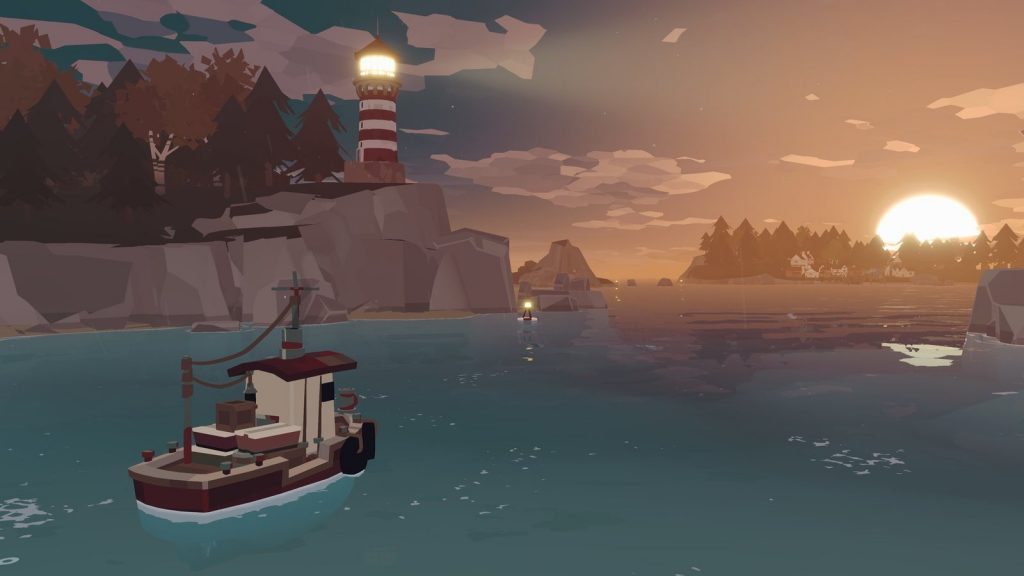
Black Salt Games’ fishing game turns cosmic horror into a gentle loop. Days are calm: sail, fish, upgrade your boat. At night, fog rolls in and a panic meter rises, making strange events more likely. You choose how long to stay out after dark, which effectively lets you set your own scare level. Its creators aimed for a psychological thriller atmosphere rather than jump scares.
Good for: players who want to control their exposure to fear.
3. Little Nightmares (2017)
Tarsier Studios’ puzzle-platformer casts you as Six, a nine-year-old girl in a yellow raincoat, escaping a vast underwater vessel called the Maw. You hide and evade rather than fight, and the horror comes from grotesque, oversized adults and creeping atmosphere rather than gore. It is short and has a storybook look that softens the edges. Its sequels, Little Nightmares II (2021) and Little Nightmares III (2025), make good follow-ups.
Good for: players who like puzzles and unsettling art direction.
Interactive horror movies
4. Until Dawn (2015, remade 2024)
Supermassive Games’ interactive drama puts you in control of eight young adults trying to survive a night on Blackwood Mountain. Most action happens through quick-time events and choices, any of the eight can live or die, and deaths are permanent. The appeal for beginners is that it plays like a slasher film you direct: scares are frequent, but you are rarely asked to aim or manage resources. The original was released for PlayStation 4; a remake by Ballistic Moon arrived on PS5 and Windows on October 4, 2024.
Good for: horror film fans who want story and choices over combat.
5. The Quarry (2022)
Another Supermassive horror drama, this time about nine camp counselors on their last night at Hackett’s Quarry. Two features make it especially newcomer-friendly: a Movie mode that lets you set characters’ traits and simply watch the story unfold, and a Death Rewind feature, unlocked after a first playthrough, that undoes a limited number of deaths. Local multiplayer lets friends take turns controlling characters.
Good for: group nights and players who would rather watch than act.
Co-op scares
6. Phasmophobia (early access since 2020)
Kinetic Games’ ghost-hunting game has one to four players investigating haunted locations, gathering evidence to identify a ghost. It can be genuinely frightening, especially when a hunt begins, but playing with friends turns much of that fear into laughter. It is also a good way to learn how horror pacing works: long quiet stretches, then sudden spikes.
Good for: players who are braver in company.
Note: the game uses voice recognition, so the ghost can react to what you say aloud. That makes it more immersive and, for some, more intense.
Modern classics with easier modes
7. Resident Evil 2 (2019)
Capcom’s remake is the best way to experience classic survival horror with modern controls. It has an Assisted difficulty designed to reduce the pressure, and the game’s structure, a police station you gradually unlock, gives you time to learn its layout. There is a persistent stalker enemy who cannot be killed, which is the most stressful part for newcomers, but safe rooms stay safe. Our Resident Evil starting guide explains why many fans recommend it as a first entry.
Good for: players who want a “real” survival horror game with a safety net.
8. Resident Evil Village (2021)
The eighth main game offers a Casual difficulty for players focused on story and exploration. Its gothic setting and larger-than-life villains make it more of a dark adventure than a relentless scare-fest for much of its length, and an optional third-person mode is available. One section is noticeably more frightening than the rest, so be prepared for a spike.
Good for: players who like action with their horror.
9. Alan Wake 2 (2023)
Remedy’s survival horror game splits its story between FBI agent Saga Anderson and the writer Alan Wake. Its Story difficulty is aimed at players who mainly want to focus on the narrative and puzzles, and a 2024 update added further assist options such as infinite ammo and one-shot kills. It is long and dense, with some jump scares, but its mystery-solving structure gives you plenty of breathing room between threats.
Good for: mystery fans who like slow-burn storytelling.
10. Silent Hill 2 (2024 remake)
Bloober Team’s remake lets you set combat and puzzle difficulty separately, each with a Light option. Light combat makes James Sunderland hit harder and take less damage; Light puzzles give extra clues. Combat difficulty can be changed during a playthrough. The game’s horror is more psychological and melancholy than shocking, though its themes are heavy.
Good for: players who value story and atmosphere.
A step up
11. Dead Space (2023)
Motive’s remake of the 2008 sci-fi horror classic is gory and intense, but it includes accessibility settings worth knowing about: an option to show content warnings before especially graphic scenes and an option to hide disturbing scenes altogether. Combined with an easier difficulty, it lets newcomers try a full-strength horror game with some control over what they see.
Good for: action fans ready for more intensity.
12. Alien: Isolation (2014)
Creative Assembly’s stealth horror game is on this list as a final exam rather than a starting point. A single alien hunts you through a space station, following sight and sound rather than a fixed path, and you must hide and sneak to survive. It is one of the most acclaimed horror games ever made, and once you have a few of the games above under your belt, it is the natural next challenge.
Good for: newcomers who have discovered they actually love being scared.
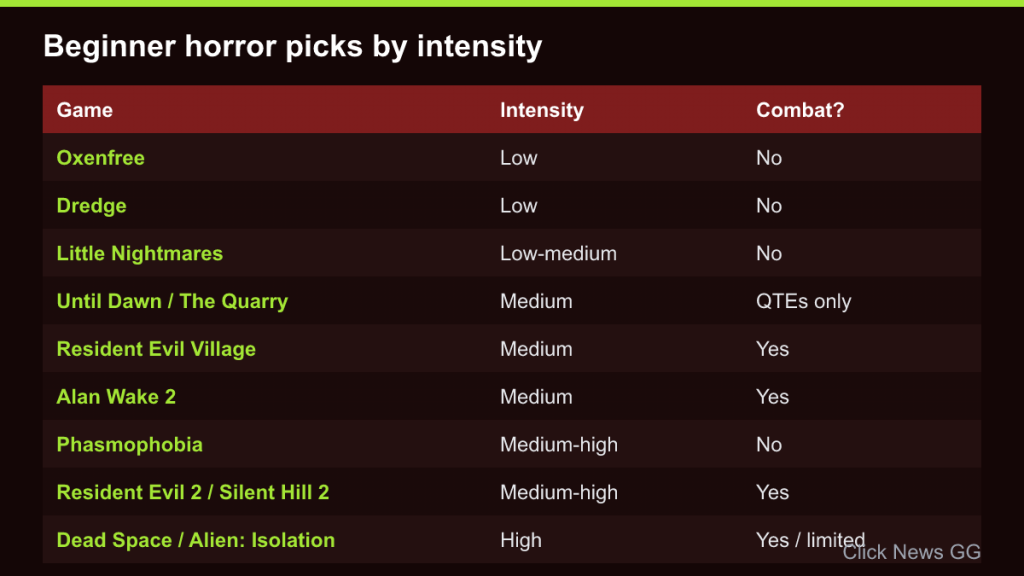
Quick reference table
| Game | Intensity | Combat? | Beginner-friendly feature |
|---|---|---|---|
| Oxenfree | Low | No | No game-over states |
| Dredge | Low | No | You choose how long to stay out at night |
| Little Nightmares | Low-medium | No | Short, puzzle-driven |
| Until Dawn | Medium | QTEs only | Plays like a film |
| The Quarry | Medium | QTEs only | Movie mode |
| Phasmophobia | Medium-high | No | Play with friends |
| Resident Evil 2 | Medium-high | Yes | Assisted difficulty |
| Resident Evil Village | Medium | Yes | Casual difficulty |
| Alan Wake 2 | Medium | Yes | Story difficulty and assists |
| Silent Hill 2 (2024) | Medium-high | Yes | Light combat and puzzle settings |
| Dead Space (2023) | High | Yes | Content warning options |
| Alien: Isolation | High | Limited | None, a true test |
Tips for your first horror games
- Know your style first. If being chased is your worst nightmare, avoid run-and-hide games for now. Our guide to horror subgenres explains the differences.
- Lower the difficulty without guilt. Easier modes exist precisely so that more people can enjoy these stories.
- Play in short sessions. An hour at a time keeps tension fun rather than exhausting.
- Play with the lights on, or with friends. Atmosphere is part of the experience, but you can dial it down.
- Look at the settings menu before you start. Many modern horror games hide useful options there, from difficulty and aim assistance to content warnings, as in the Dead Space remake.
- It is fine to stop. If a game is more upsetting than enjoyable, put it down and try something gentler from this list. Horror is meant to be fun.
- Turn down the music, not the sound effects. Sound cues often warn you of danger, so muting everything can make games harder, not easier.
The bottom line
There is no “correct” first horror game. If you want to dip a toe in, start with Oxenfree or Little Nightmares. If you want the full survival horror experience with a safety net, Resident Evil 2 on Assisted is hard to beat. And if you prefer screaming alongside friends, Until Dawn, The Quarry or Phasmophobia turn fear into a shared event. Work your way down the list, and you may be surprised how quickly “scaredy-cat” turns into “horror fan”.