Quantic Dream History: From Fahrenheit to Detroit: Become Human
The story of David Cage's Paris studio, from The Nomad Soul and Fahrenheit to Heavy Rain, Beyond, Detroit, NetEase and Star Wars Eclipse.
Few studios have a design identity as recognizable as Quantic Dream’s. Its games put you in the shoes of ordinary people in extraordinary situations, translate everyday actions into analog-stick gestures, and keep the story going even when characters fail or die. Fans call them interactive dramas; critics have sometimes called them movies with button prompts. Either way, the Paris studio founded by David Cage has spent nearly three decades arguing that games can tell adult, branching stories driven by choice rather than combat.
This history walks through every major Quantic Dream release, the technology demos that previewed its ideas, the design philosophy behind its “contextual” controls, and where the studio stands as of October 2026 after its acquisition by NetEase. It avoids spoiling major twists.
Founding and The Nomad Soul (1997-1999)
Quantic Dream was founded in Paris by David Cage on May 2, 1997. Cage wanted to make games that felt closer to film, and the studio’s first project showed that ambition while still borrowing heavily from other genres.
The Nomad Soul, sold in North America as Omikron: The Nomad Soul, launched on Windows in November 1999 and reached the Dreamcast in June 2000, published by Eidos Interactive. Planned PlayStation and PlayStation 2 versions were cancelled. It was a genre blender: you explored a 3D city, talked to characters, and switched between third-person adventure, side-on fist fights and first-person shooting.
Its most memorable idea was the “nomad soul” mechanic itself. When the protagonist died, the player’s soul transferred into the body of the first non-player character who touched them, and later the player could jump between bodies deliberately. The other headline feature was David Bowie. He composed ten original songs with guitarist Reeves Gabrels and appeared in the game as two characters, including the singer of an in-game band. Reviews were mixed, with many critics finding the combination of play styles uneven, but the game established Quantic Dream’s interest in identity, performance and cinematic ambition.
Fahrenheit / Indigo Prophecy (2005): The Template Takes Shape
The studio’s second game is where the Quantic Dream formula really appears. Fahrenheit was released in September 2005 on Windows, PlayStation 2 and Xbox, published by Atari. In North America it was retitled Indigo Prophecy to avoid confusion with Michael Moore’s 2004 documentary Fahrenheit 9/11, a change Cage disagreed with.
The setup is pure thriller. In a New York diner, office worker Lucas Kane commits a murder while seemingly possessed, then has to work out what happened while detectives Carla Valenti and Tyler Miles investigate the case. The player controls both sides, so you can be hiding evidence as Lucas in one scene and hunting for it as Carla in the next.
Several ideas from Fahrenheit became studio signatures:
- Gesture-based actions: instead of pressing a single button to open a door, you mimic the motion with an analog stick.
- Split-screen sequences: inspired by the TV series 24, the screen divides to show simultaneous events, such as a police officer approaching while you clean up a crime scene.
- A mental health meter: a gauge tracking each character’s state of mind, which can collapse if events go badly.
- Branching outcomes: choices and failed actions shift scenes, and the story has three possible endings.
Angelo Badalamenti, best known for his work with David Lynch, composed the score. The North American release cut the game’s sex scenes; they were restored in Fahrenheit: Indigo Prophecy Remastered in 2015, which brought the game to PC, mobile and other platforms, followed by a PlayStation 4 version in 2016. Fahrenheit’s late-game story swerve into supernatural conspiracy divided players, but its first half remains a reference point for cinematic choice-based design.
Heavy Rain (2010): The Breakthrough
Quantic Dream’s partnership with Sony began with Heavy Rain, a PlayStation 3 exclusive released in February 2010 and published by Sony Computer Entertainment. Before it arrived, the studio had shown an earlier tech demo, The Casting, built to preview its approach to digital acting.
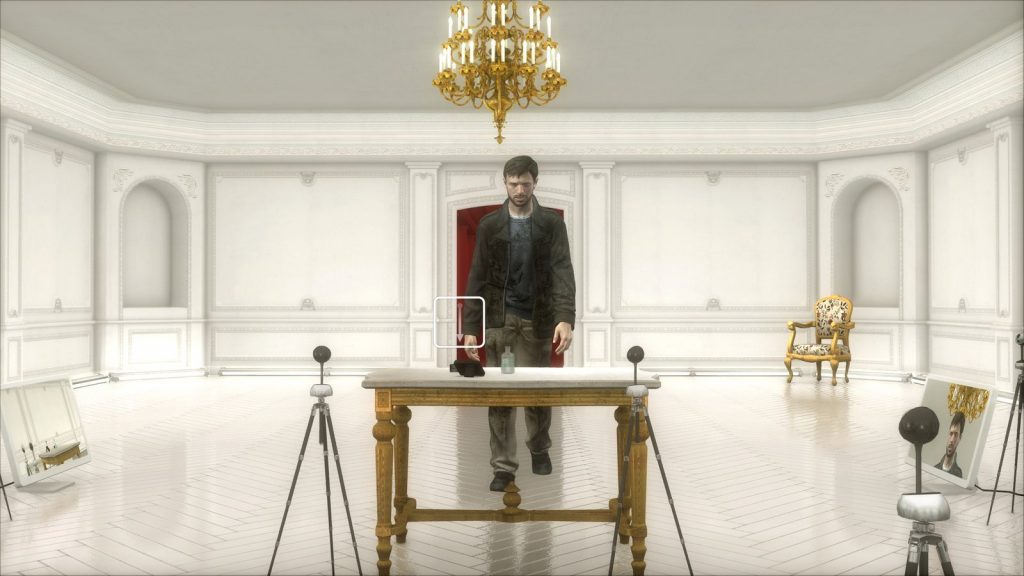
Heavy Rain follows four playable characters connected to the case of the Origami Killer, a murderer who abducts young boys during autumn rainfall and leaves an origami figure and an orchid at each scene. Architect Ethan Mars searches for his kidnapped son; journalist Madison Paige, FBI profiler Norman Jayden and private investigator Scott Shelby approach the case from other angles.
Why the controls mattered
Heavy Rain is the clearest example of the studio’s contextual approach to controls. Walking uses R2 to move forward and the left stick to steer. Interactions appear as on-screen prompts tied to the action: push the stick up slowly to open a drawer, shake the controller to struggle, hold several buttons at once to keep a grip. Tense action scenes use quick-time events, but failure rarely ends the game. A playable character can die, and the story continues without them, changing later scenes and the epilogue.
That last point is the game’s biggest legacy. Removing the game over screen meant mistakes became story, and the player had to live with outcomes. It is the same principle later adopted, in different ways, by many of the studios we described in our explainer on interactive drama games. A PlayStation Move edition followed in October 2010, a PlayStation 4 remaster in March 2016, and a Windows version in 2019.
Beyond: Two Souls (2013): Hollywood Casting
For its next game Quantic Dream leaned further into film-style production. Beyond: Two Souls launched on PlayStation 3 in October 2013, was remastered for PlayStation 4 in November 2015, and reached Windows in July 2019. It stars Elliot Page (credited at the time as Ellen Page) as Jodie Holmes and Willem Dafoe as Nathan Dawkins, a researcher in paranormal activity who becomes a father figure to her.
Jodie has been linked since birth to Aiden, an invisible entity the player can control to move objects, possess people and protect her. The story follows Jodie from childhood into adulthood. In a two-player game, a second person can control Aiden while the first plays as Jodie, an early example of the studio thinking about shared play in narrative games.
The same year, the studio also produced another tech demo, The Dark Sorcerer, continuing its habit of previewing its performance technology before a full game. Beyond itself remains the studio’s most character-centered work, built around a single life rather than a single case.
Detroit: Become Human (2018): Branching at Scale
Quantic Dream’s biggest project grew out of Kara, a 2012 PlayStation 3 tech demo in which an android, played by Valorie Curry, is assembled and becomes self-aware on a factory line. Six years later the idea became Detroit: Become Human, released on PlayStation 4 on May 25, 2018 and published by Sony Interactive Entertainment.
Set in a near-future Detroit where androids serve humans, the game follows three androids:
- Kara (Valorie Curry), a domestic android who protects a young girl.
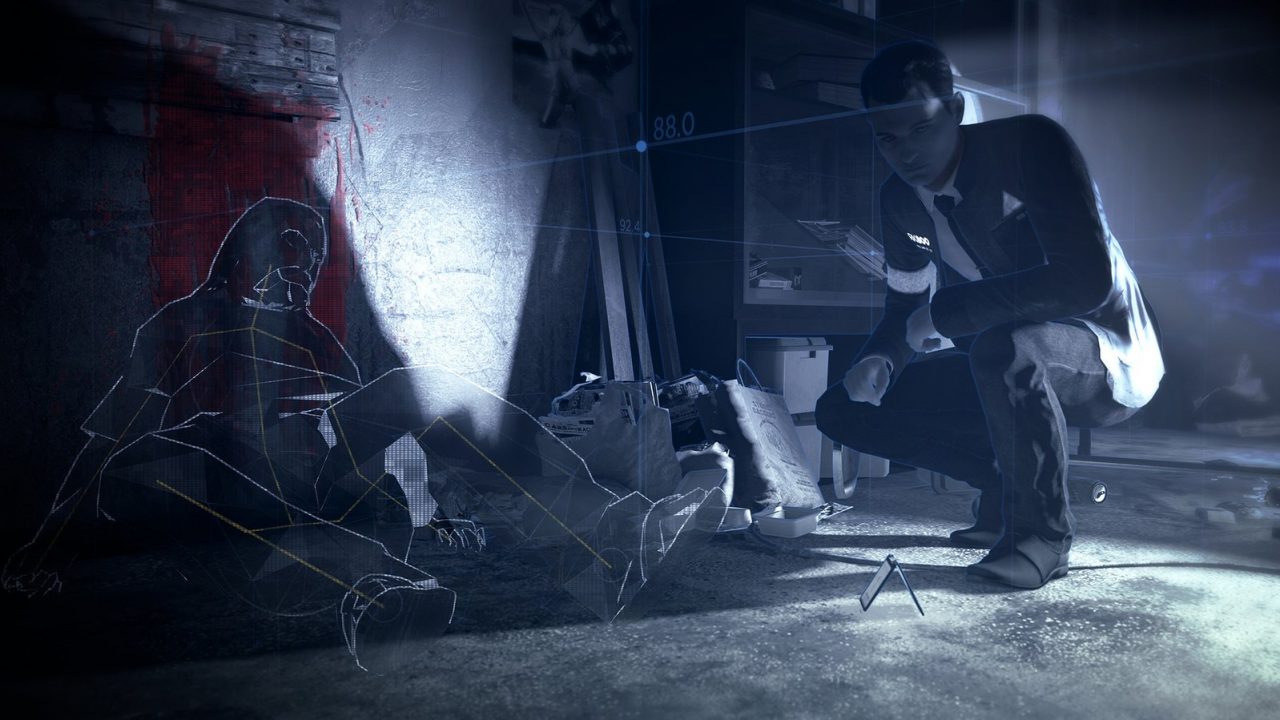
- Connor (Bryan Dechart), a police investigator android hunting “deviants.”
- Markus (Jesse Williams), a caretaker android who can become the leader of an android uprising.
Detroit’s key innovation is transparency. After each chapter, and during play, you can open a flowchart showing the branches you took, the ones you missed and how many paths existed, which turned replaying into a game in itself. Any of the three leads can die, and their stories can end early. The scale of branching was much larger than in previous Quantic Dream games, and the flowchart became one of its most praised features, though some critics felt it broke immersion.
The game came to Windows on December 12, 2019, first through the Epic Games Store and later on Steam, with Quantic Dream self-publishing.
The Quantic Dream Design Philosophy
Across these games, a few principles stay constant:
- Contextual, physical controls. Instead of a fixed button set, inputs mirror the action on screen, which aims to make mundane moments like making coffee or shaving feel embodied.
- The story never stops. Since Heavy Rain, failure usually changes the story rather than forcing a reload.
- Multiple perspectives. Most games switch between several protagonists, letting the player see a conflict from more than one side.
- Performance capture and acting. Professional actors, recorded body and face together, are central to every production since Heavy Rain.
- Ordinary actions as drama. The games spend real time on daily routines to build attachment before things go wrong.
Critics have long debated David Cage’s writing, especially his handling of sensitive themes and his tendency towards melodrama, and the studio’s games are often cited in arguments about whether choice-driven narratives offer real agency or an illusion of it. Supporters point out that few studios have been as consistent in trying to make mainstream games about something other than combat. For a sense of how other studios developed the same ideas, compare our histories of Supermassive Games and Life is Strange.
Controversy, NetEase and Self-Publishing
In 2018, three French outlets published reports describing a toxic workplace culture at Quantic Dream, including offensive images circulating in the studio, heavy crunch and questionable HR practices. The studio rejected the reports and later sued two of the outlets, Le Monde and Mediapart, with mixed results in court.
The business side changed significantly after Detroit. Quantic Dream began self-publishing its PC versions in 2019, bringing Heavy Rain, Beyond: Two Souls and Detroit to Windows. Chinese publisher NetEase took a minority stake in January 2019 and acquired the studio outright in August 2022, with Quantic Dream stating that it continues to operate independently. In 2023 it launched a publishing label, Spotlight by Quantic Dream, for games from other developers.
Leadership has remained stable: David Cage leads creative direction, and Guillaume de Fondaumière, a long-time executive at the studio, serves as CEO.
Star Wars Eclipse and the Studio’s Status as of October 2026
At The Game Awards in December 2021, Quantic Dream revealed Star Wars Eclipse, an action-adventure set in the High Republic era of Star Wars, roughly two centuries before The Phantom Menace. As of October 2026, the game has no announced release date or confirmed platforms, and it is still described as being in development.
The studio has also experimented outside its usual genre. Its multiplayer game Spellcasters Chronicles entered early access in early 2026, but it struggled to find an audience, and Quantic Dream announced plans to shut it down in June 2026, alongside layoffs. Those events have raised questions about the studio’s next phase, but as of October 2026 there is no official announcement of a new release date for Eclipse, and anything beyond that remains speculation.
Where to Start With Quantic Dream
If you are new to the studio, play in this order:
- Detroit: Become Human – the most polished and replayable, with the clearest sense of how choices matter.
- Heavy Rain – the breakthrough, best for players who like noir thrillers and do not mind dated controls.
- Beyond: Two Souls – for players who enjoy character studies and can accept a more guided experience.
- Fahrenheit Remastered – a historical curiosity with a strong opening.
Whatever you think of the stories, these games mapped out much of the language interactive drama still uses: branching consequences, playable deaths, split perspectives and the belief that a quiet scene can be as gripping as a firefight.