
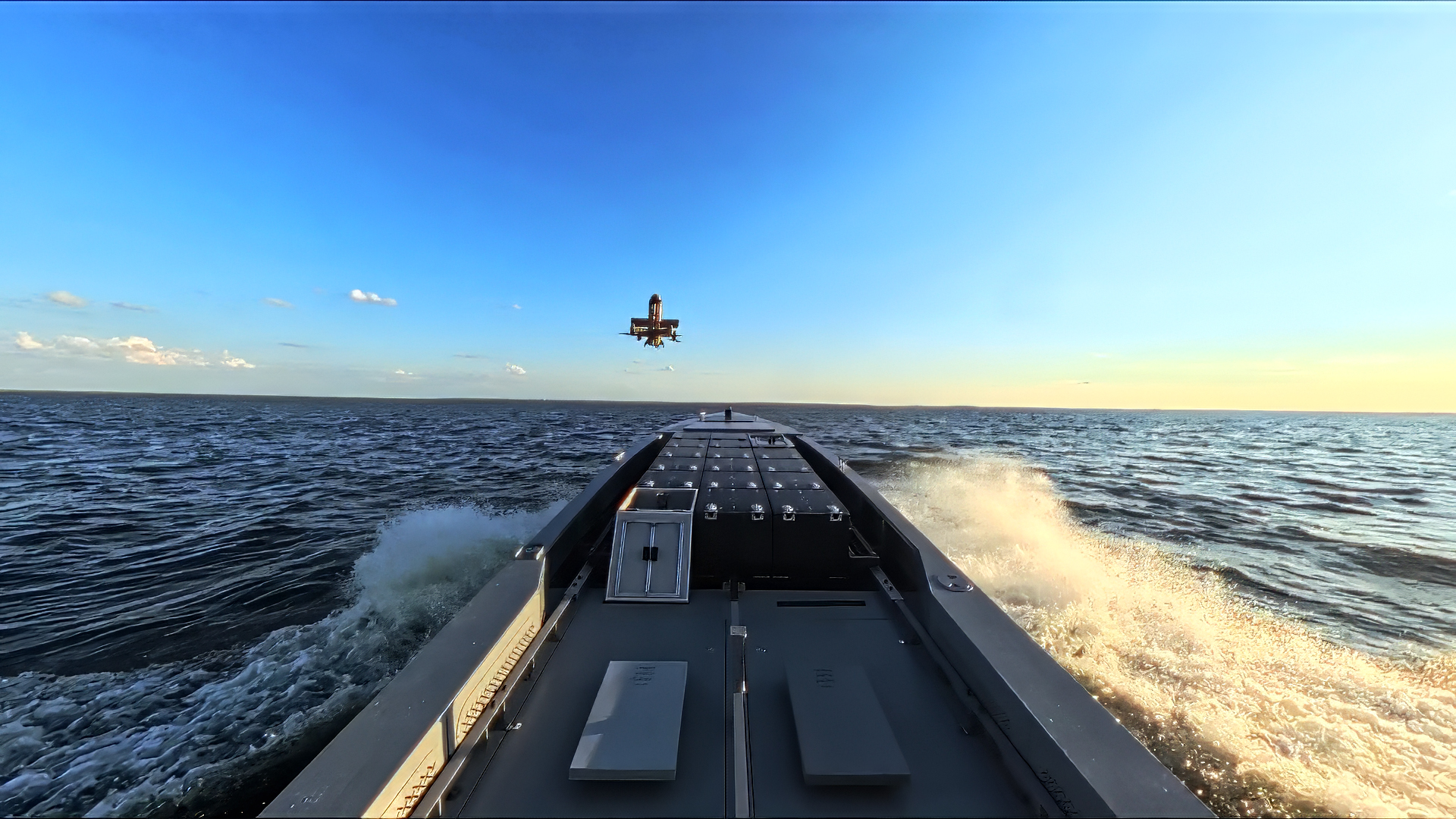
Ukrainian defense manufacturer Uforce has officially unveiled its latest maritime innovation, the MV11 unmanned surface vessel (USV), marking a significant advancement in naval drone warfare technology. The MV11 represents the largest platform in the company’s Magura drone series and introduces a groundbreaking capability that sets it apart from previous models: the ability to serve as a mothership for launching secondary unmanned systems. This multi-role functionality positions Ukraine at the forefront of asymmetric naval warfare development, a domain that has seen rapid evolution since the beginning of the full-scale conflict in 2022.
The announcement comes as Ukraine continues to demonstrate the effectiveness of maritime drones in challenging conventional naval forces. The country’s innovative approach to sea-based unmanned systems has already achieved remarkable results, including multiple successful strikes against Russian Black Sea Fleet vessels. The Magura series, developed by Uforce in collaboration with Ukraine’s Defense Intelligence (HUR), has been instrumental in these operations, fundamentally changing the strategic balance in the Black Sea region and forcing Russian naval assets to retreat from previously dominant positions near Ukrainian shores.
Technical Specifications and Enhanced Capabilities
The MV11 represents a substantial upgrade over its predecessors in the Magura family. While specific technical specifications remain classified for operational security reasons, the vessel’s most notable feature is its expanded payload capacity and sophisticated launch systems that enable it to deploy smaller aerial or surface drones during missions. This carrier capability transforms the MV11 from a single-purpose attack platform into a versatile multi-mission system capable of conducting reconnaissance, surveillance, and coordinated strike operations simultaneously. The drone’s increased size likely provides greater fuel capacity for extended range operations, enhanced stability in rough sea conditions, and additional space for advanced sensor packages and communication equipment.
Military analysts suggest that the mothership concept addresses several tactical challenges faced by smaller drone operators. By deploying secondary drones from a forward position, operators can extend their reconnaissance and strike radius without exposing larger, more expensive platforms to enemy countermeasures. This swarm-capable approach complicates defensive responses and creates multiple threat vectors that adversaries must address simultaneously. The integration of different drone types also enables sophisticated combined operations where aerial reconnaissance drones can identify targets for maritime strike platforms in real-time.
Strategic Impact on Modern Naval Warfare
The development of the MV11 reflects broader trends in military technology where unmanned systems are increasingly taking on roles traditionally reserved for crewed platforms. Ukraine’s experience has demonstrated that relatively inexpensive maritime drones can effectively threaten vessels costing hundreds of millions of dollars, fundamentally altering cost-benefit calculations in naval warfare. The Russian Black Sea Fleet has lost multiple major warships to Ukrainian drone attacks, including the flagship Moskva and several landing ships, prompting a significant withdrawal from waters near Ukrainian territory. This asymmetric advantage has enabled Ukraine to maintain access to vital shipping lanes and protect its Black Sea coastline despite lacking a traditional blue-water navy.
International defense observers have closely monitored Ukraine’s maritime drone development, with several NATO countries expressing interest in the technology and tactics employed. The MV11’s carrier capability represents the next evolutionary step in this domain, potentially inspiring similar developments worldwide. Naval strategists note that the ability to project unmanned systems from unmanned platforms creates layered operational capabilities that are difficult to counter with conventional anti-ship defenses. As drone swarm technology continues to mature, the MV11 may serve as a template for future naval combat systems that operate with minimal human presence in contested waters.
Future Implications and Development Trajectory
Uforce’s continued investment in maritime drone technology signals Ukraine’s commitment to indigenous defense production and technological innovation despite wartime pressures. The company has rapidly expanded its capabilities since 2022, moving from experimental prototypes to operational systems that have proven their effectiveness in combat conditions. The MV11’s introduction suggests that Ukrainian engineers are already thinking several steps ahead, developing platforms that can adapt to evolving battlefield requirements and integrate with broader military networks. As the conflict continues, such innovations may prove decisive in maintaining Ukraine’s defensive capabilities and potentially reshaping how navies worldwide approach unmanned systems development.
Expert Opinion: The MV11’s mothership capability represents a paradigm shift in unmanned naval warfare, moving beyond single-purpose attack drones toward integrated maritime systems that can conduct complex multi-domain operations. This development will likely accelerate global naval drone programs and may force significant revisions to conventional naval doctrine, particularly regarding fleet defense against distributed unmanned threats. Within the next decade, we can expect carrier-drone concepts to become standard features in advanced naval arsenals worldwide.