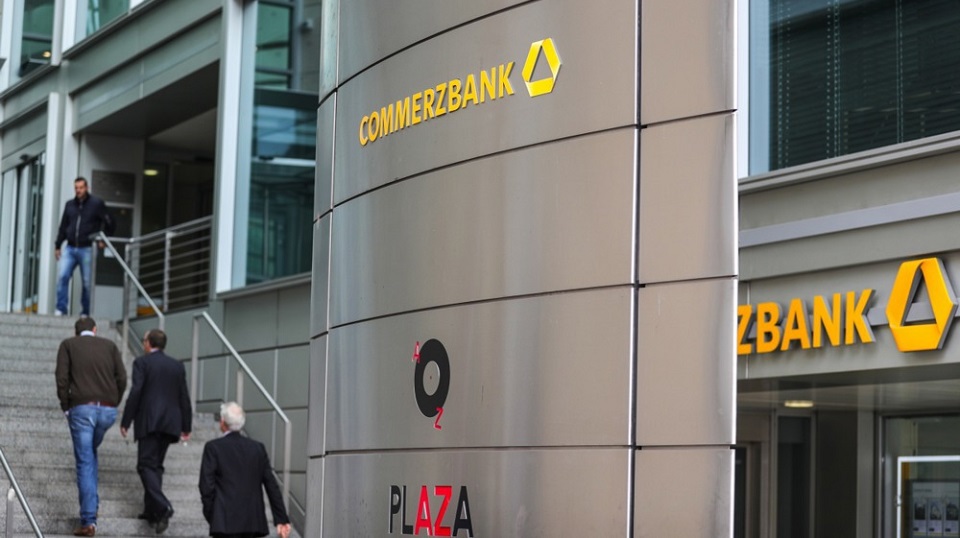
The German government has reportedly abandoned its efforts to block the acquisition of Commerzbank, the country’s third-largest bank, by Italian banking giant UniCredit. According to Bloomberg, Berlin has shifted its strategy from outright opposition to preparing a list of conditions and requirements that would govern the merger, marking a significant turning point in one of Europe’s most closely watched banking consolidation battles.
This development represents a major policy reversal for Germany, which had initially expressed strong resistance to foreign takeover of one of its flagship financial institutions. The shift suggests that pragmatic considerations have ultimately prevailed over nationalist economic sentiment, potentially opening the door to greater cross-border banking consolidation within the European Union.
Background of the UniCredit-Commerzbank Saga
UniCredit’s interest in Commerzbank became public in late 2024 when the Milan-based bank began accumulating shares in its German rival. The Italian lender, led by CEO Andrea Orcel, has been pursuing an aggressive expansion strategy aimed at creating a pan-European banking champion capable of competing with larger American financial institutions. UniCredit currently holds a significant stake in Commerzbank, positioning itself as the dominant shareholder.
Commerzbank, founded in 1870 in Hamburg, has been a cornerstone of German banking for over 150 years. The bank plays a crucial role in financing Germany’s small and medium-sized enterprises, known as the Mittelstand, which form the backbone of Europe’s largest economy. During the 2008 financial crisis, Commerzbank required a government bailout, and the German state maintained a stake in the institution for years afterward, making the prospect of foreign ownership particularly sensitive politically.
Why Germany Changed Its Position
Several factors appear to have influenced Berlin’s decision to accept the inevitable. First, EU regulations governing the single market make it extremely difficult for member states to block cross-border acquisitions on purely nationalistic grounds. The European Central Bank serves as the primary supervisor for major eurozone banks, and any attempt to obstruct a legitimate takeover could face legal challenges and undermine Germany’s credibility as a champion of European integration.
Additionally, Commerzbank has struggled to deliver consistent profitability in recent years, facing challenges from low interest rates, digital disruption, and intense competition from both traditional rivals and fintech newcomers. A merger with UniCredit could provide the scale and resources necessary to modernize operations and compete more effectively in an increasingly consolidated European banking landscape. Analysts have noted that the combined entity would rank among Europe’s largest banks by assets.
Germany’s Conditions and Concerns
While accepting the takeover in principle, the German government is reportedly preparing a detailed list of requirements designed to protect national interests. These conditions are expected to address several key concerns, including job preservation at Commerzbank’s German operations, maintenance of the bank’s commitment to lending to domestic businesses, and retention of significant decision-making authority in Germany.
Berlin is also likely to seek guarantees regarding Commerzbank’s headquarters remaining in Frankfurt, Germany’s financial capital, and ensuring that the merged entity maintains adequate presence and investment in the German market. Labor unions and employee representatives have expressed concerns about potential cost-cutting measures that typically accompany large mergers, making workforce protections a particularly sensitive issue for the German government.
Implications for European Banking
The UniCredit-Commerzbank deal, if completed, would represent a landmark moment in European banking consolidation. For years, policymakers and industry leaders have called for greater cross-border mergers to create banks capable of matching the scale of American and Asian competitors. However, national governments have frequently resisted such combinations, prioritizing domestic control over financial institutions deemed strategically important.
This transaction could establish a precedent for future cross-border banking mergers in the eurozone, potentially accelerating consolidation across the bloc. Market observers suggest that successful completion of the deal might encourage other European banks to pursue similar acquisitions, reshaping the competitive landscape of continental finance in the years ahead.
Expert Opinion: The German government’s acceptance of UniCredit’s takeover signals a pragmatic recognition that European banking consolidation is inevitable and necessary for global competitiveness. While Berlin will extract meaningful concessions regarding jobs and domestic lending commitments, this deal likely marks the beginning of a new era of cross-border European banking mergers that could fundamentally reshape the continent’s financial architecture over the next decade.