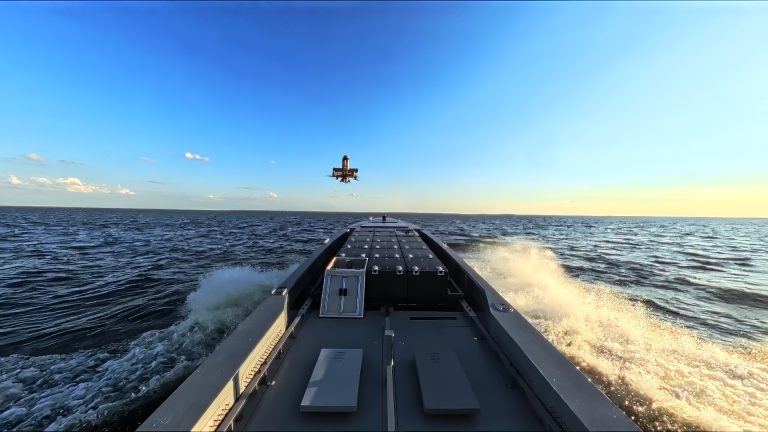
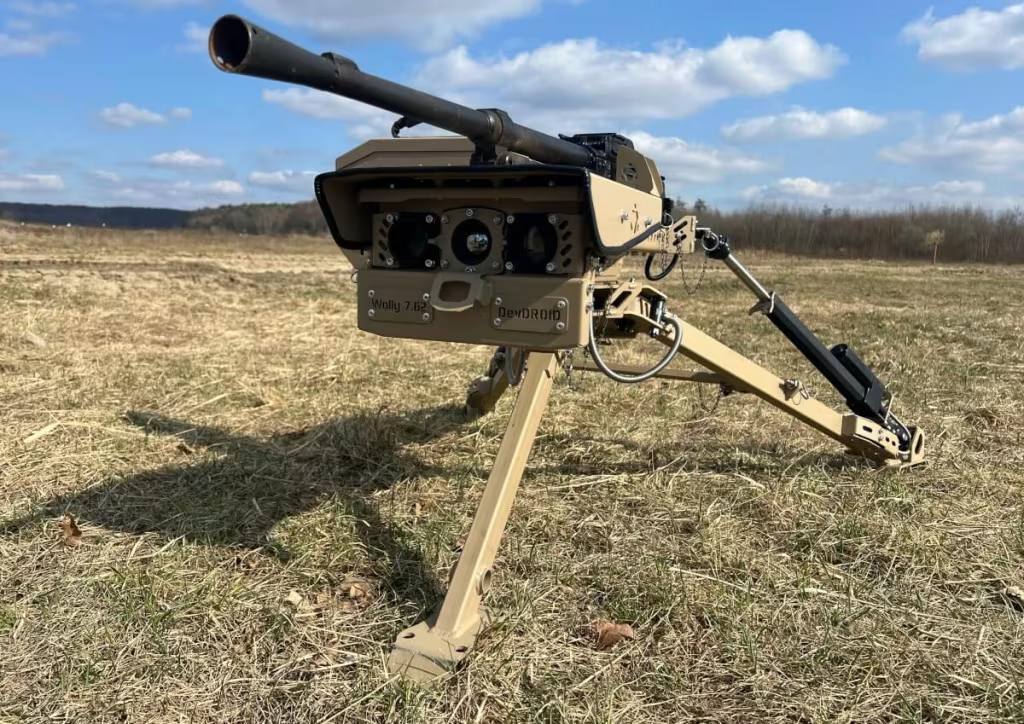
In a groundbreaking tactical operation that showcases the evolving nature of modern warfare, Ukrainian military forces have successfully demonstrated a new method of deploying combat robots using unmanned naval vessels. For the first time in military history, a maritime drone was used to transport and deliver a ground-based combat robot to the strategically significant Kinburn Spit, marking a significant milestone in autonomous warfare capabilities and inter-domain robotic cooperation.
This innovative approach represents a major leap forward in Ukraine’s military doctrine, which has increasingly relied on unmanned systems since the beginning of the full-scale Russian invasion in February 2022. The successful mission demonstrates Ukraine’s ability to conduct complex multi-platform operations that combine sea and land autonomous systems, potentially opening new possibilities for military operations in contested coastal areas where traditional troop deployment would be extremely dangerous or impossible.
Strategic Significance of the Kinburn Spit
The Kinburn Spit holds immense strategic importance in the ongoing conflict. This narrow sandy peninsula, located at the confluence of the Dnieper River and the Black Sea in the Mykolaiv region, controls access to the Dnieper-Bug estuary and provides potential staging grounds for operations toward Russian-occupied territories. Since the liberation of Kherson in November 2022, the spit has remained a contested zone, with both sides recognizing its tactical value for controlling maritime approaches and monitoring enemy movements.
Historically, the Kinburn Peninsula has been a site of military significance dating back centuries, including during the Crimean War when Allied forces captured the Russian fortress there in 1855. In the current conflict, the area’s geographic features — its isolation, difficult terrain, and exposure to enemy fire — make traditional military operations extremely challenging. This context explains why Ukrainian forces have turned to robotic solutions for conducting missions in such hazardous environments, minimizing the risk to human soldiers while maintaining operational effectiveness.
Evolution of Ukrainian Drone Warfare Capabilities
Ukraine has emerged as a global leader in drone warfare innovation, driven by necessity and supported by a robust domestic tech sector. The country’s forces have successfully developed and deployed a wide range of unmanned systems, from small commercial quadcopters modified for dropping grenades to sophisticated maritime drones capable of striking major naval vessels. The destruction of several Russian warships, including the missile cruiser Moskva and various patrol boats, demonstrated the effectiveness of Ukraine’s naval drone program, which has fundamentally altered the balance of power in the Black Sea.
The integration of ground-based combat robots with naval delivery systems represents the next evolutionary step in this technological arms race. Ground robots, often equipped with weapons, reconnaissance equipment, or explosive charges, have been increasingly used by both sides in the conflict for tasks ranging from surveillance to direct combat. However, the challenge of delivering these systems to remote or heavily defended locations has limited their operational utility. By using maritime drones as transport platforms, Ukrainian forces have potentially solved this logistics problem, creating a seamless chain of autonomous systems that can operate without putting human lives at direct risk.
Implications for Future Military Operations
Military analysts suggest that this successful demonstration could have far-reaching implications for future warfare doctrines worldwide. The ability to project ground combat capability from sea to shore using entirely unmanned systems creates new tactical possibilities that traditional military planning has not fully addressed. This approach could be particularly valuable for reconnaissance missions, establishing sensor networks in enemy territory, conducting sabotage operations, or creating diversions to support larger conventional operations.
The development also poses new challenges for defensive planning, as militaries must now consider threats from autonomous systems that can approach from multiple domains simultaneously. Traditional coastal defense systems designed to counter naval vessels or amphibious landing craft may prove inadequate against small, low-signature drones delivering even smaller ground-based robots. This asymmetric capability allows Ukraine to threaten Russian positions in ways that would be impossible with conventional forces, potentially forcing Russia to divert significant resources to counter these new threats along extensive coastlines.
Expert Opinion: This operation signals a paradigm shift in littoral warfare, where the combination of maritime and terrestrial autonomous systems creates a force multiplication effect that extends operational reach while eliminating human casualties in high-risk insertions. As Ukraine continues to refine these tactics, we can expect other nations to rapidly develop similar multi-domain robotic capabilities, fundamentally changing how coastal operations will be conducted in future conflicts.