
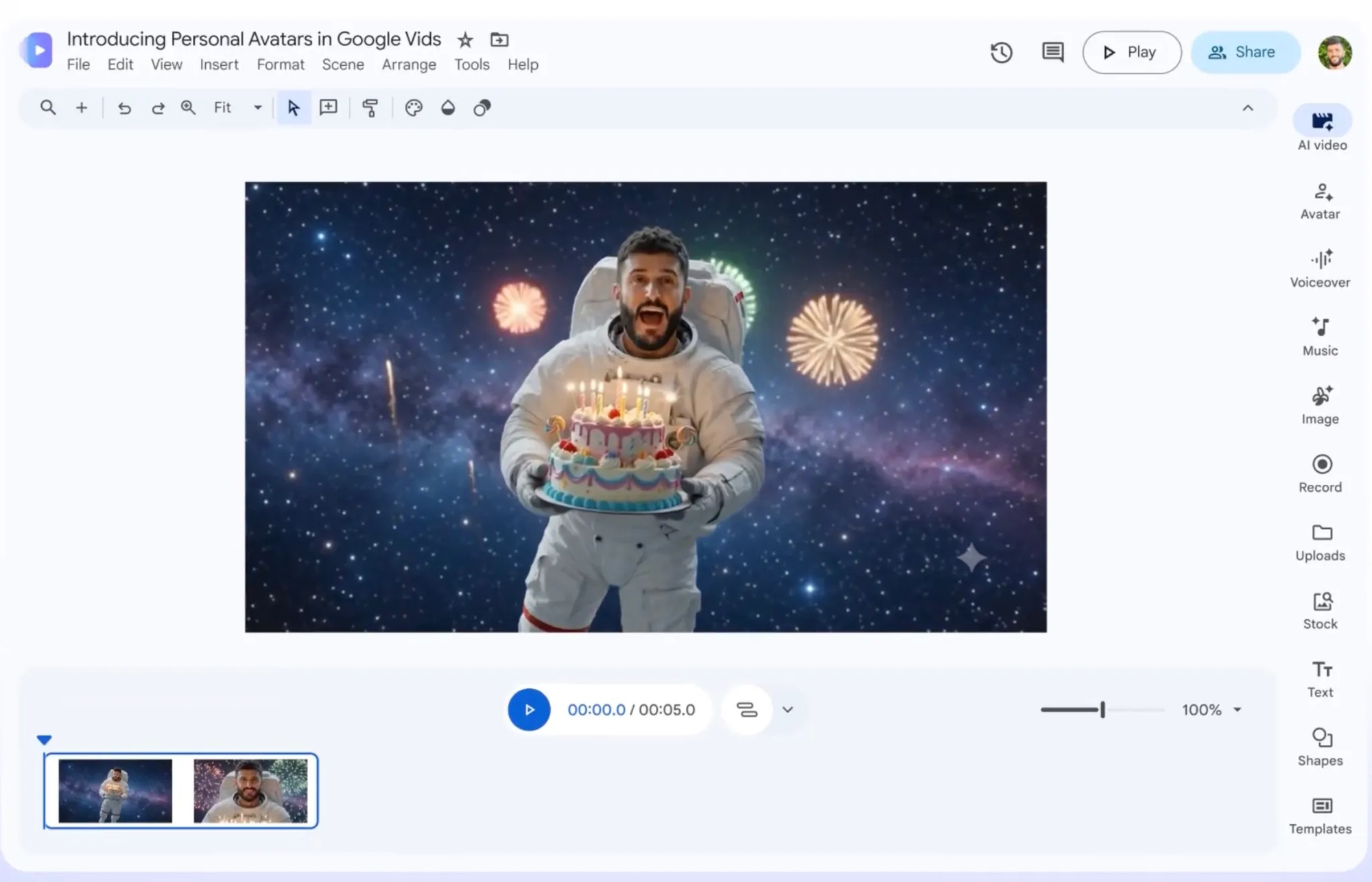
Google has unveiled a groundbreaking new feature for its video creation platform Google Vids that allows users to generate professional-looking videos featuring their own AI-powered digital avatar. This innovative technology represents a significant leap forward in AI-assisted content creation, enabling users to produce videos without ever stepping in front of a camera. The feature is currently restricted to users aged 18 and older, reflecting Google’s cautious approach to deploying synthetic media technology responsibly.
Revolutionary AI Avatar Technology Transforms Video Production
The new Google Vids feature leverages advanced artificial intelligence to create a realistic digital representation of the user based on their appearance and voice. Users can train the system to recognize their facial features, expressions, and vocal patterns, which the AI then uses to generate convincing video content. This technology builds upon years of research in deepfake detection and generation, but applies it constructively for legitimate content creation purposes. The AI avatar can deliver presentations, explain concepts, or narrate content in multiple languages while maintaining the user’s authentic appearance and speaking style.
This development comes at a time when businesses and content creators are increasingly seeking efficient ways to produce video content at scale. Traditional video production requires significant time, equipment, and technical expertise. With AI avatars, users can simply type or speak their script, and the system generates a polished video featuring their digital twin. Early testers report that the technology produces remarkably natural-looking results, with smooth lip synchronization and appropriate facial expressions that match the emotional tone of the content.
Age Restrictions and Ethical Considerations
Google’s decision to limit the feature to users 18 and older underscores the complex ethical landscape surrounding synthetic media technology. The company has implemented robust verification systems to ensure compliance with this age requirement, recognizing that AI-generated content featuring individuals raises significant concerns about consent, identity theft, and potential misuse. This responsible deployment strategy aligns with broader industry efforts to establish guardrails around generative AI technologies.
The tech giant has also incorporated multiple safeguards to prevent malicious use of the avatar feature. Users can only create avatars of themselves, requiring identity verification through Google’s existing authentication systems. Additionally, all AI-generated videos include embedded metadata indicating their synthetic origin, making it easier to identify and flag potentially deceptive content. These measures reflect lessons learned from the proliferation of deepfake technology in recent years, which has been used for everything from entertainment to disinformation campaigns.
Industry Impact and Future Implications
The introduction of AI avatars in Google Vids signals a broader transformation in how video content will be created and consumed in the coming years. Market analysts predict that AI-generated video content could represent a significant portion of online video within the next decade. For businesses, this technology promises substantial cost savings in training videos, marketing content, and internal communications. Educational institutions are also expressing interest in using AI avatars to create multilingual instructional content efficiently.
However, some media experts caution that the widespread adoption of AI avatars could have unintended consequences for authenticity and trust in digital communications. As the technology becomes more sophisticated and accessible, distinguishing between human-recorded and AI-generated content will become increasingly challenging. This reality underscores the importance of transparency measures and digital literacy education to help audiences navigate an increasingly synthetic media landscape. Google has indicated that it will continue refining the technology while actively engaging with policymakers and civil society organizations to address emerging concerns about AI-generated content.
Expert Opinion: The integration of AI avatar technology into mainstream platforms like Google Vids marks a pivotal moment in content creation democratization. While this advancement will undoubtedly boost productivity and accessibility for legitimate users, the industry must remain vigilant about establishing robust verification standards. We anticipate that within two to three years, AI-generated video content will become indistinguishable from traditional recordings, making proactive regulation and transparent labeling essential for maintaining public trust in digital media.