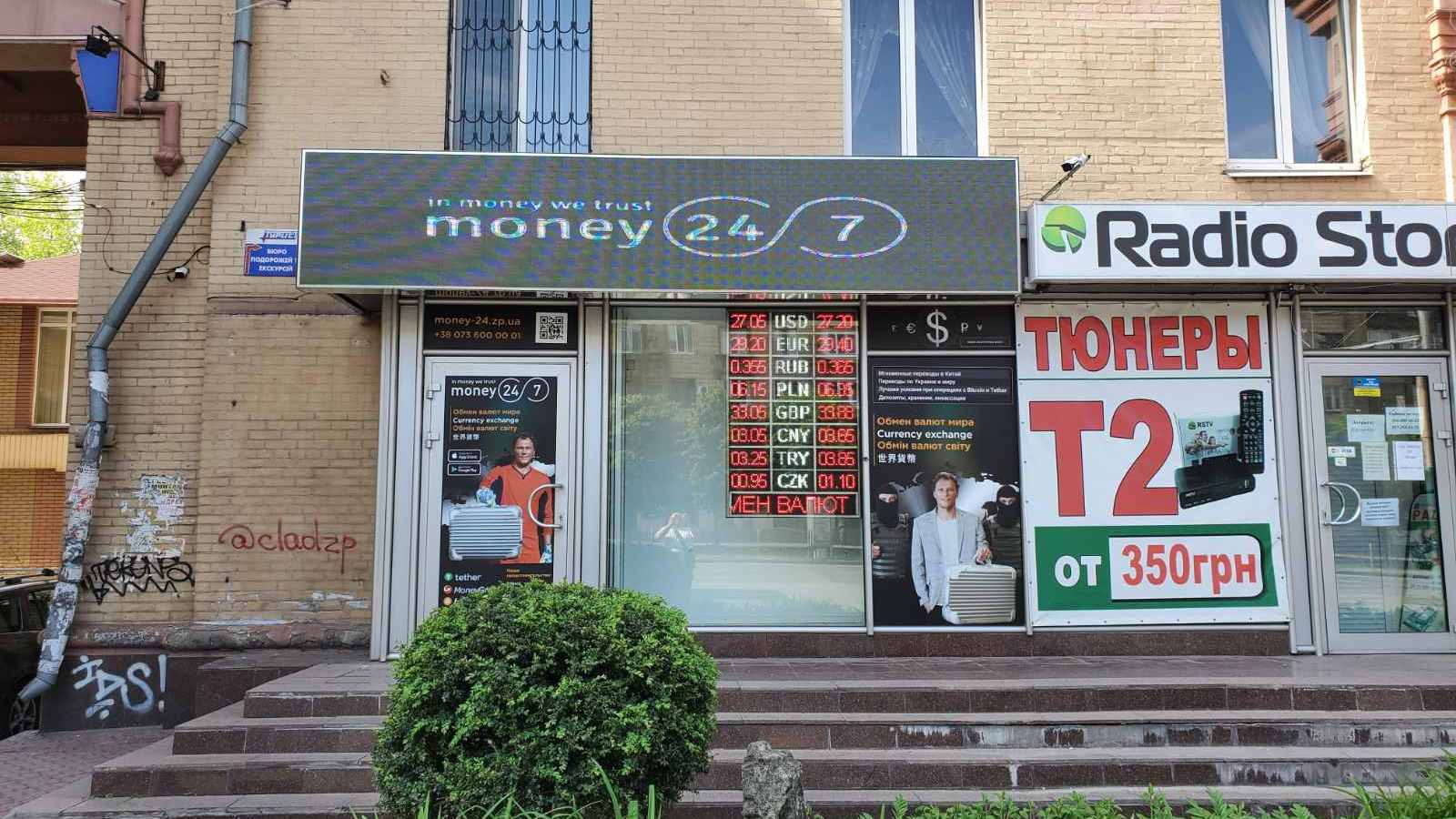
The National Bank of Ukraine (NBU) has officially prohibited the operations of Money 24/7, a group of interconnected companies that had been conducting currency exchange and money transfer services without the required financial licenses. This decisive regulatory action underscores the central bank’s ongoing commitment to maintaining order and transparency in Ukraine’s financial sector, particularly during a time when the country faces unprecedented economic challenges due to the ongoing conflict.
The crackdown on unlicensed financial operators represents a significant step in Ukraine’s broader efforts to combat financial crimes and protect consumers from potentially fraudulent schemes. Money 24/7 had established a network of services offering currency exchange and remittance operations, attracting customers with convenient locations and competitive rates. However, operating without proper licensing means these services lacked the regulatory oversight necessary to protect customer funds and ensure compliance with anti-money laundering regulations.
Understanding Ukraine’s Financial Licensing Requirements
In Ukraine, any entity wishing to provide financial services such as currency exchange or money transfers must obtain appropriate licenses from the National Bank of Ukraine. This licensing process involves rigorous background checks, capital requirements, and ongoing compliance obligations designed to ensure financial stability and consumer protection. Licensed operators must maintain adequate reserves, implement robust anti-money laundering procedures, and submit to regular audits and inspections by regulatory authorities.
The licensing framework was significantly strengthened following Ukraine’s commitment to European integration and the adoption of international financial standards. Companies operating without these licenses not only violate Ukrainian law but also pose significant risks to consumers, who have limited recourse if their funds are mishandled or lost. Furthermore, unlicensed operators often serve as conduits for money laundering, tax evasion, and other financial crimes that undermine the integrity of the entire financial system.
The Growing Challenge of Unlicensed Financial Services
The proliferation of unlicensed financial services has become a growing concern for regulators worldwide, and Ukraine is no exception. These shadow financial operators often exploit gaps in enforcement and take advantage of consumers seeking convenient alternatives to traditional banking services. In recent years, the NBU has intensified its efforts to identify and shut down such operations, working closely with law enforcement agencies and international partners to trace illegal financial flows.
The war in Ukraine has created additional complexities in the financial sector, with millions of displaced citizens relying on money transfer services to support family members both domestically and abroad. This increased demand has unfortunately attracted bad actors seeking to profit from the situation without meeting regulatory requirements. The NBU has responded by increasing surveillance of the financial services market while also working to ensure that legitimate services remain accessible to those who need them most.
Implications for Consumers and the Financial Sector
Consumers who have used Money 24/7 services may face uncertainty regarding any pending transactions or stored funds. The NBU typically works to ensure that affected customers can recover their money, though the process can be lengthy and complicated when dealing with unlicensed operators. Financial experts advise Ukrainian consumers to always verify that any financial service provider holds valid NBU licensing before conducting transactions, a simple check that can prevent significant financial losses.
The enforcement action against Money 24/7 sends a clear message to other unlicensed operators that the NBU will not tolerate violations of financial regulations. Industry analysts expect this crackdown to continue as Ukraine works to align its financial sector with European Union standards in anticipation of eventual EU membership. Licensed financial institutions have generally welcomed such enforcement actions, noting that unlicensed competitors create unfair market conditions and erode public trust in the financial system as a whole.
Expert Opinion: This enforcement action reflects Ukraine’s determination to maintain financial system integrity despite wartime pressures. As Ukraine pursues EU integration, we can expect increasingly aggressive regulation of shadow financial services. Consumers should treat this as a reminder that convenience should never outweigh the security provided by properly licensed financial institutions, particularly in times of economic uncertainty.