
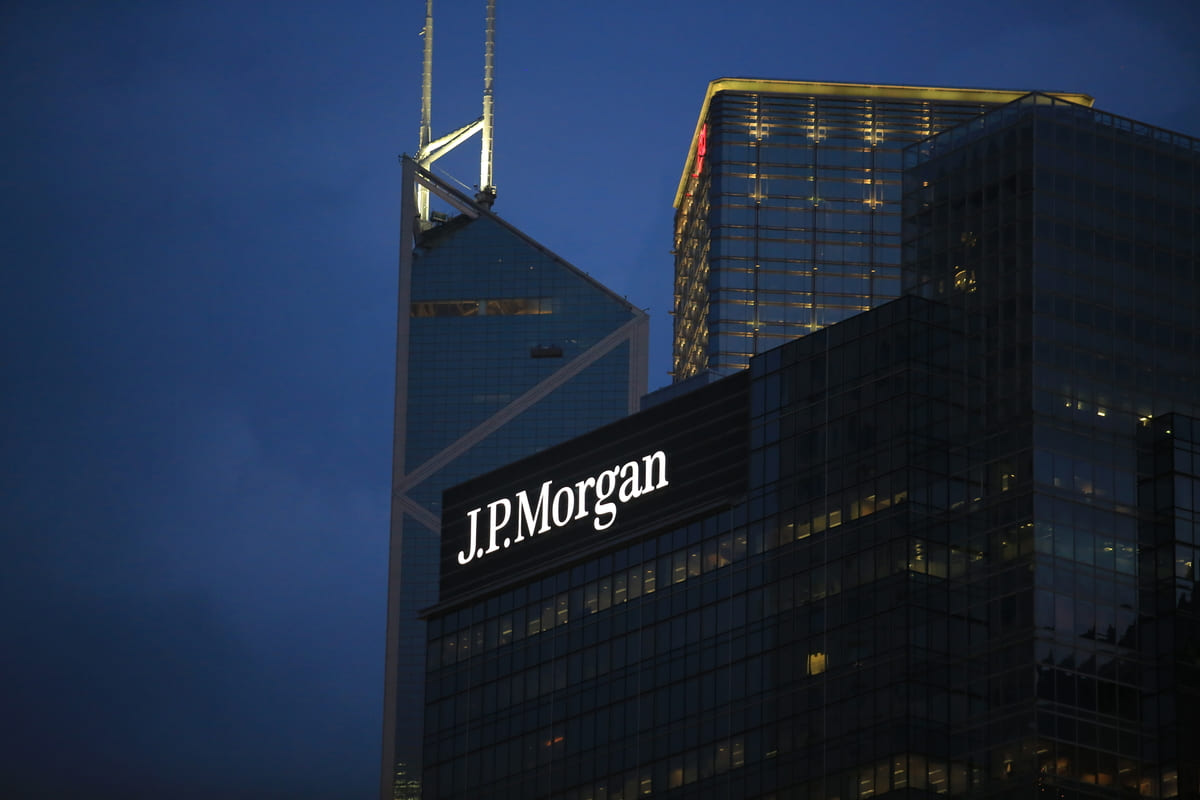
JPMorgan Chase, America’s largest financial institution, is on the verge of achieving a historic milestone that would cement its position as the undisputed leader of global banking. According to Reuters, the banking giant is rapidly approaching a market capitalization of $1 trillion, a threshold no bank has ever crossed in history. This remarkable valuation surge underscores the extraordinary dominance JPMorgan has established over its competitors, with its market value now exceeding that of its three closest rivals combined.
The path to this unprecedented valuation reflects years of strategic expansion, prudent risk management, and aggressive positioning in key financial markets. Under the leadership of CEO Jamie Dimon, who has helmed the institution since 2006, JPMorgan has consistently outperformed its peers through economic cycles, regulatory challenges, and market disruptions. The bank’s ability to generate consistent profits while maintaining fortress-like capital reserves has made it a favorite among institutional investors seeking stable returns in the financial sector.
The Scale of JPMorgan’s Market Dominance
The sheer magnitude of JPMorgan’s market capitalization advantage over competitors reveals the extent to which the banking landscape has consolidated around a single dominant player. When a company’s value surpasses that of its next three competitors combined, it signals a fundamental shift in industry dynamics. For context, JPMorgan’s closest American rivals include Bank of America, Wells Fargo, and Citigroup, all of which have faced various challenges in recent years ranging from regulatory penalties to strategic missteps that have hindered their growth trajectories.
JPMorgan’s diversified business model has proven particularly resilient in varying economic conditions. The bank operates across multiple segments including consumer banking, commercial banking, investment banking, and asset management. This diversification allows the institution to capture revenue across the entire financial ecosystem, from everyday checking accounts held by millions of Americans to complex derivative transactions for multinational corporations. In 2024, the bank reported record revenues exceeding $170 billion, demonstrating its ability to monetize its vast customer base and market position effectively.
Historical Context and Industry Transformation
The journey toward a trillion-dollar valuation represents the culmination of decades of consolidation in American banking. JPMorgan Chase in its current form emerged from the 2000 merger between J.P. Morgan & Co. and Chase Manhattan Corporation, itself a product of numerous previous mergers. The 2008 financial crisis proved transformative for the institution, as it acquired Bear Stearns and Washington Mutual at distressed prices, expanding its footprint dramatically while competitors struggled for survival. These crisis-era acquisitions added millions of customers and billions in assets at a fraction of their pre-crisis values.
The broader context of technology sector valuations provides perspective on JPMorgan’s achievement. While tech giants like Apple, Microsoft, and Nvidia have long commanded trillion-dollar valuations, traditional financial institutions have typically traded at more modest multiples. Banks face unique challenges including heavy regulation, capital requirements, and interest rate sensitivity that constrain their valuation potential. For JPMorgan to approach parity with technology companies in market value terms represents a significant rerating of the banking sector’s investment appeal.
Looking Forward: Implications for Global Finance
The implications of JPMorgan reaching the trillion-dollar milestone extend beyond symbolic significance. Such concentrated market power in a single financial institution raises questions about systemic risk and regulatory oversight. The bank is already designated as a Global Systemically Important Bank (G-SIB), subjecting it to enhanced capital requirements and supervision. A trillion-dollar valuation would likely intensify scrutiny from regulators and policymakers concerned about too-big-to-fail dynamics in the financial system.
For investors and market observers, JPMorgan’s trajectory offers insights into the future of banking. The institution has invested heavily in technology, spending over $15 billion annually on tech infrastructure and innovation. This includes artificial intelligence applications, blockchain exploration, and digital banking platforms that position the bank competitively against both traditional rivals and emerging fintech challengers. As the financial services industry continues evolving, JPMorgan’s path to a trillion-dollar valuation demonstrates that traditional banks can thrive by embracing innovation while leveraging their established advantages in scale, trust, and regulatory expertise.
Expert Opinion: JPMorgan’s approach to the trillion-dollar threshold reflects a broader consolidation trend in global banking where scale increasingly determines competitive survival. Should the bank achieve this milestone, it may trigger renewed regulatory debate about concentration risks in the financial system, while simultaneously encouraging other major banks to pursue aggressive growth strategies or merger opportunities. The next decade will likely see either increased regulatory intervention to limit banking giants or further consolidation as smaller institutions struggle to compete with JPMorgan’s technological and capital advantages.